Master Fabricator Diagnostic
Repair or Replace? Here’s How We Actually Decide.
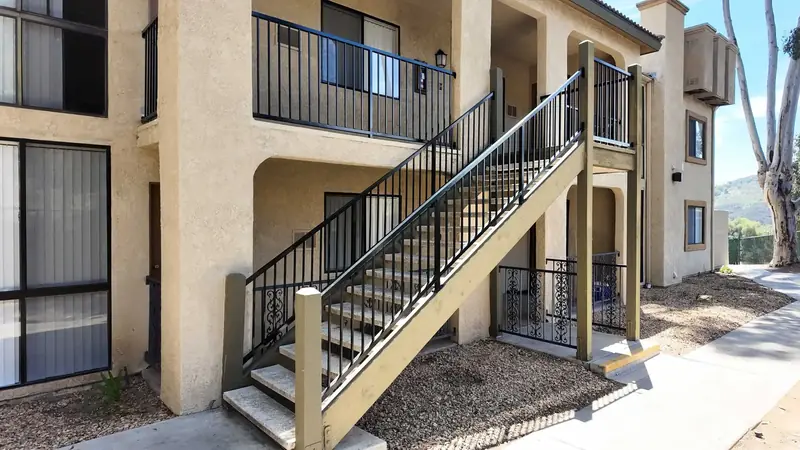
One of the most common questions property managers and building owners ask when facing deteriorated stair runs is whether sections can be spot-repaired or whether the entire flight must be condemned and rebuilt.
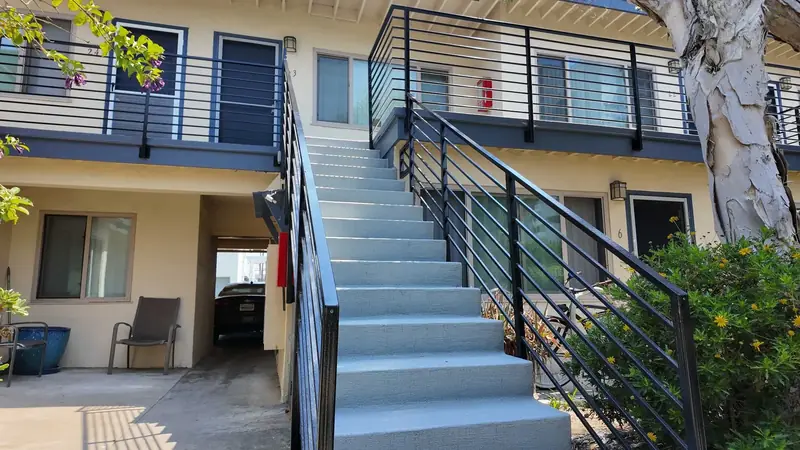
Luis recently evaluated a project in Pacific Beach — an aggressive marine environment where salt spray is constant. The railings were approximately 50 years old. Under ordinary conditions, that age triggers immediate replacement. But the owner had maintained them meticulously, repainting on schedule for decades. Luis inspected the assembly on-site and confirmed zero structural compromise in the posts, welds, or base anchors. The only issue was outdated picket spacing. The call: weld in intermediate bars to bring the existing system into code compliance. The steel was sound, and repair was the right answer.
Contrast that with the far more common scenario in 40–50 year-old San Diego complexes: ground-level base plate rot.
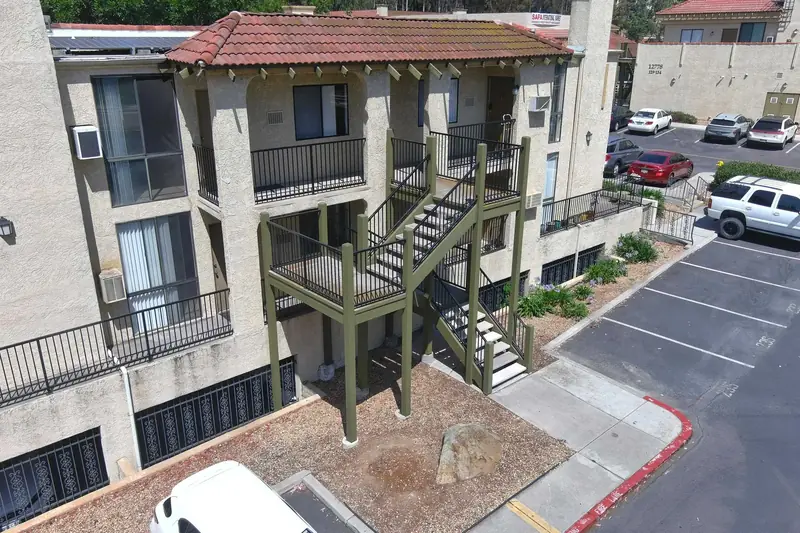
When stairs are installed before final site grading or where grade settlements cause water to pond at the bottom step, moisture sits permanently against the base mounting plate. Over time, corrosion rots out the anchor bolts, eats through the mounting plate, and migrates directly up the structural C-channel stringer.
“When you see a post or base plate rusted through — even if it’s just a couple of them — the rest are in similar condition, very close to collapsing. At that point, it’s a liability for me to just make a repair. When you touch something, you’re responsible for the whole thing.”
Repair is viable when the steel core is structurally sound and work is limited to code modifications. Replacement is mandatory when ground-level plates or stringer bases are compromised. We inspect both, give you an honest appraisal, and never recommend an unsafe patch.