Master Fabricator Diagnostic
Repair or Replace Your Railings? How Luis Decides
Property managers ask the same question first: can we fix what we have, or does it all have to come out? The honest answer depends on the condition of the steel, and Luis would rather tell you now than surprise you halfway through the job.
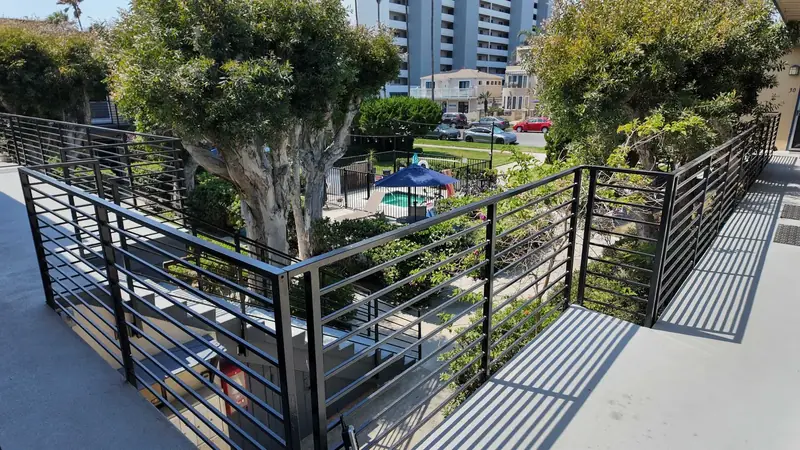
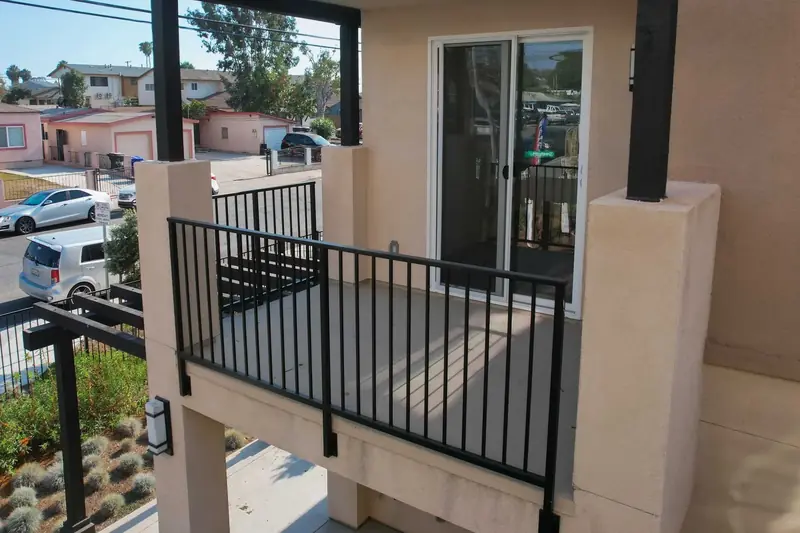
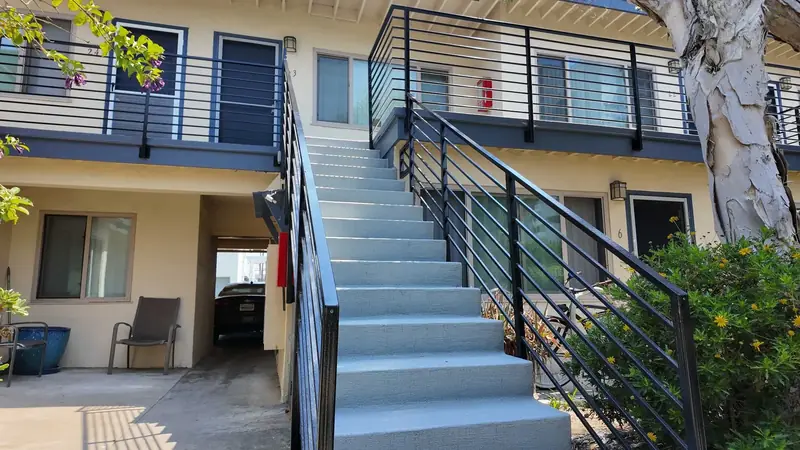
When a repair makes sense. On a Pacific Beach property, Luis agreed to add intermediate bars to existing railings because the gaps between pickets were too wide. The railings were roughly 50 years old, but the owner had kept them repainted regularly, and Luis found no structural compromise. When the steel is sound and the fix is an addition, such as closing picket gaps, a repair is the sensible and economical call.
When replacement is the better answer:
- Both picket spacing and height need correcting: If the railing has to be modified in both ways, new railings are usually the better path, especially when other damage is present.
- Posts are rusted out: If a post is rusted through, even just a couple of them, the rest of the railing is very likely in the same condition.
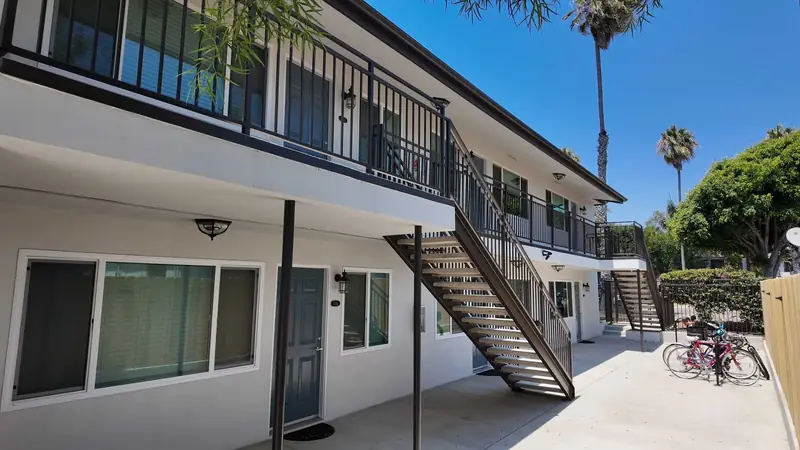
- The building is old: Many San Diego buildings are 40, 50, or 60 years old, and the original metal has outlived its working life.
- Rust you can’t see: Visible damage is surface rust, bubbling, holes, and missing pieces. The damage inside the steel is usually worse than what shows on the outside.
“When you touch something now, you’re responsible for the whole thing.”
That is why Luis will not patch something he cannot stand behind. If a repair would not be good enough, he offers new railings instead. Explore our commercial railing replacement service for apartments and HOAs.
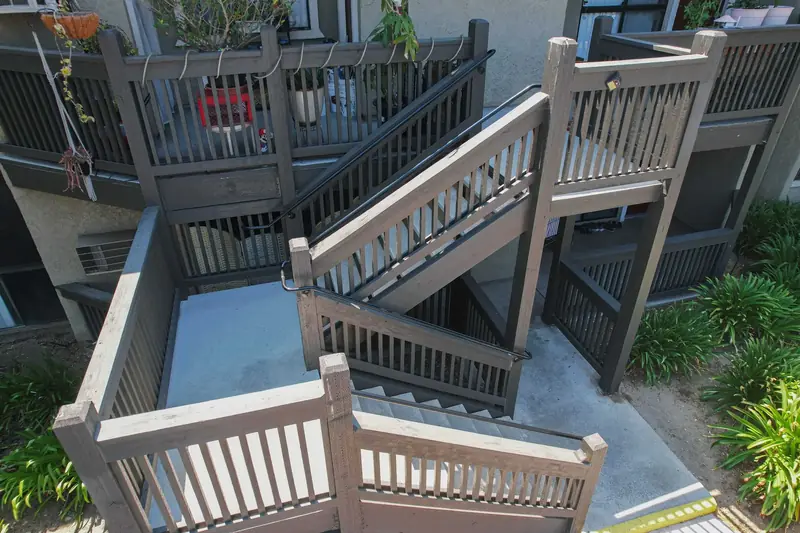
What we evaluate, and what we don’t. Luis evaluates the metal: railings, posts, pickets, welds, and anchors. Wood framing and attachments hidden behind stucco belong to an engineer or architect, and so do structural calculations and stamped drawings. If your railings attach to a stair that is also failing, our stair contractor page explains stair replacement.